
| Getting your Trinity Audio player ready... |
Let me guess.
You have four wooden spoons. Three can openers. Two cheese graters. Multiple vegetable peelers that all do the exact same thing.
And every single time you bought one of those duplicates, you could’ve sworn you didn’t have one at home.
Here’s what I want you to know: You’re not forgetful. You’re not bad at organizing. You’re not doing anything wrong.
Your kitchen is just organized for storage instead of use.
And that’s a completely different thing.
The Difference Between Storage and Use
Most kitchens are organized to maximize space.
Utensils stacked in deep drawers. Pots and pans nested inside each other. Spices lined up three rows deep in the cabinet. Food storage containers in a big pile with lids… somewhere.
It looks organized. It uses the space efficiently. Everything fits.
But here’s the problem: You can’t see what you have.
And if you can’t see it in about five seconds? Your brain assumes you don’t have it.
The Five-Second Rule
Think about what happens when you’re cooking dinner.
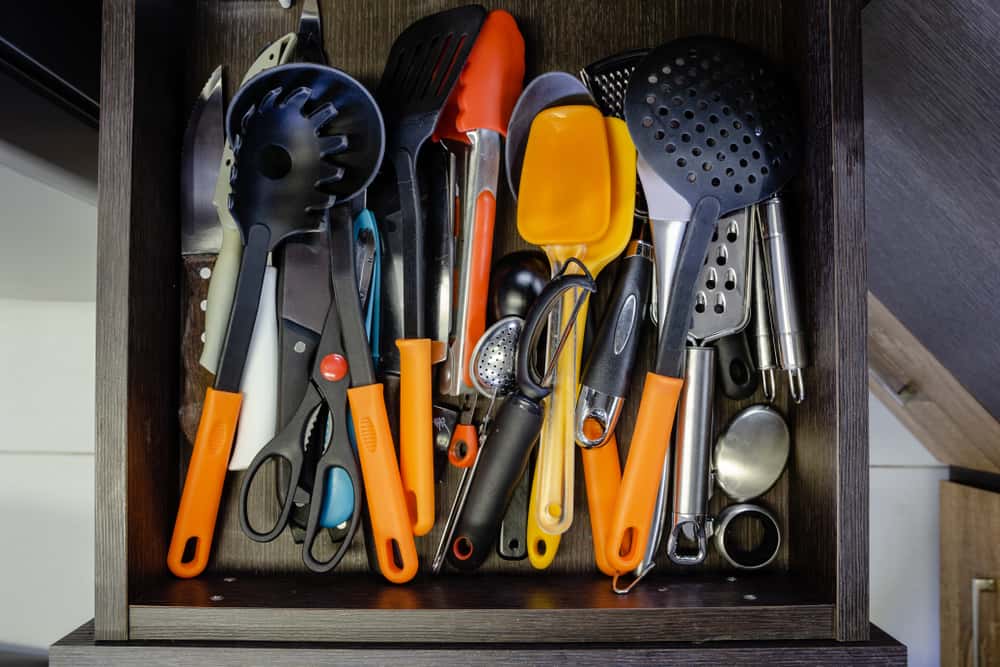
You need a wooden spoon. You open the drawer. You see… a jumble of utensils stacked on top of each other. Some handles sticking up, some buried underneath.
Do you dig through the whole drawer to confirm whether you have a wooden spoon?
Or do you grab a regular spoon and make it work?
Most people don’t dig. They work around it. And then the next time they’re at Target, they see a wooden spoon, think “I should get one of those,” and buy it.
Meanwhile, you already have three at home. You just couldn’t see them when you needed them.
That’s the five-second rule: If you can’t visually confirm that you have something within five seconds of looking, you’ll either use a substitute or buy a duplicate.
Why This Matters More Than You Think
This isn’t just about wooden spoons.
This is about olive oil (how many half-empty bottles are in your pantry right now?).
It’s about aluminum foil (you know you have a roll somewhere, but you can’t find it, so you buy another one).
It’s about Tupperware lids (you can see the containers, but the lids are in a different cabinet, so you just cover things with plastic wrap instead).
It’s about spices you know you bought but can’t find, so you buy them again, and now you have three bottles of cumin.
All of this adds up. Not just in money spent on duplicates, but in mental energy spent searching, working around missing items, and feeling frustrated every time you cook.
How Kitchens Should Be Organized
Okay, so if organizing for storage doesn’t work, what does?
You organize for quick visual scanning.
That means:
Items you use regularly should be visible at a glance.
Not stacked. Not nested. Not buried three rows deep.
If you use something at least once a week, you should be able to see it without moving anything else.
Everything should have one designated spot.
Not “somewhere in this drawer.” Not “in one of these cabinets.” One specific spot that never changes.
When you always put the wooden spoon in the same spot, you know exactly where to look. When it’s “somewhere in the utensil drawer,” you have to search every time.
The spot should make sense for how you use it.
Cooking utensils should be near the stove. Cutting boards near the prep area. Coffee supplies near the coffee maker.
This sounds obvious, but I see kitchens all the time where the cooking utensils are on the opposite side of the kitchen from the stove because that’s where the drawer was.
What This Looks Like in Practice
Let me walk you through a few specific examples.
Utensil Drawers
Stop stacking utensils on top of each other.
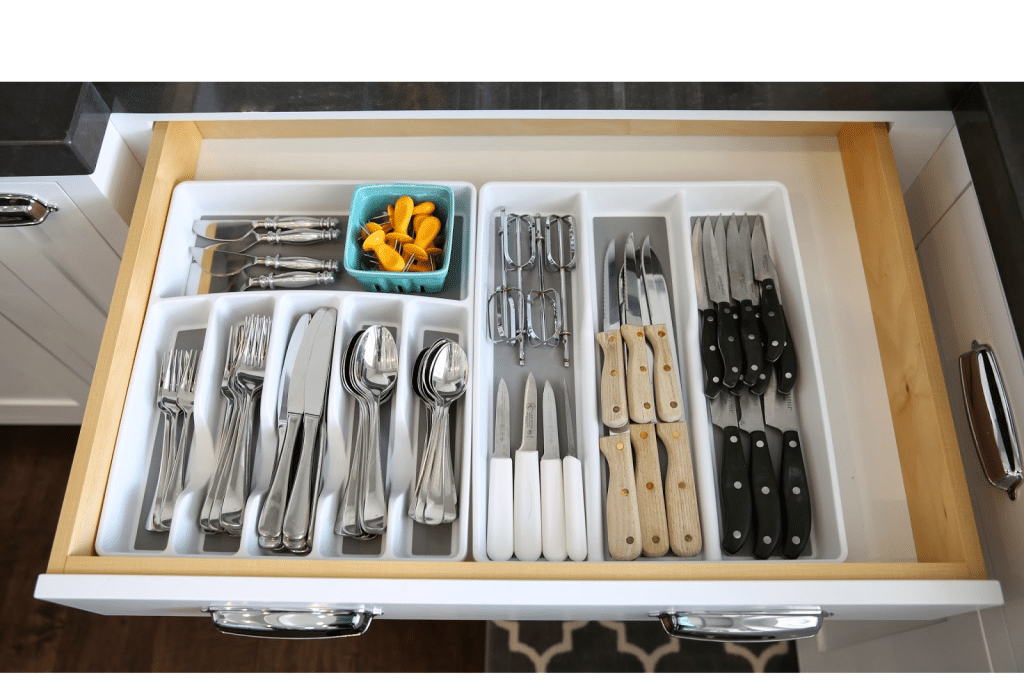
Get a drawer organizer with sections. Every type of utensil gets its own section. Spatulas in one. Wooden spoons in another. Whisks in another.
When you open the drawer, you should be able to see every single utensil without moving anything.
Yes, this might mean some sections are empty or only have one or two items. That’s okay. The goal isn’t to fill every section—it’s to see what you have.
Pots and Pans
Stop nesting them.
I know, I know—it saves space. But it also means you have to pull out three pots to get to the one you actually need.
If you have the cabinet space, store them in a single layer. If you don’t have cabinet space, use a pot rack or install hooks inside the cabinet to hang them.
The goal: grab the pot you need without moving any others.
Food Storage Containers
This is the one that drives everyone crazy.
Here’s what works: Store containers with their lids already on them.
Yes, they take up more space. But you know what you’re not doing anymore? Digging through a pile of containers trying to find a matching lid. Giving up and using plastic wrap instead. Buying new containers because you can’t find the lids to the ones you have.
Keep only the containers you actually use. If you have 30 containers and only use 10 regularly, get rid of the other 20. Store the ones you use with lids attached, stacked neatly.
Game changer.
Spices
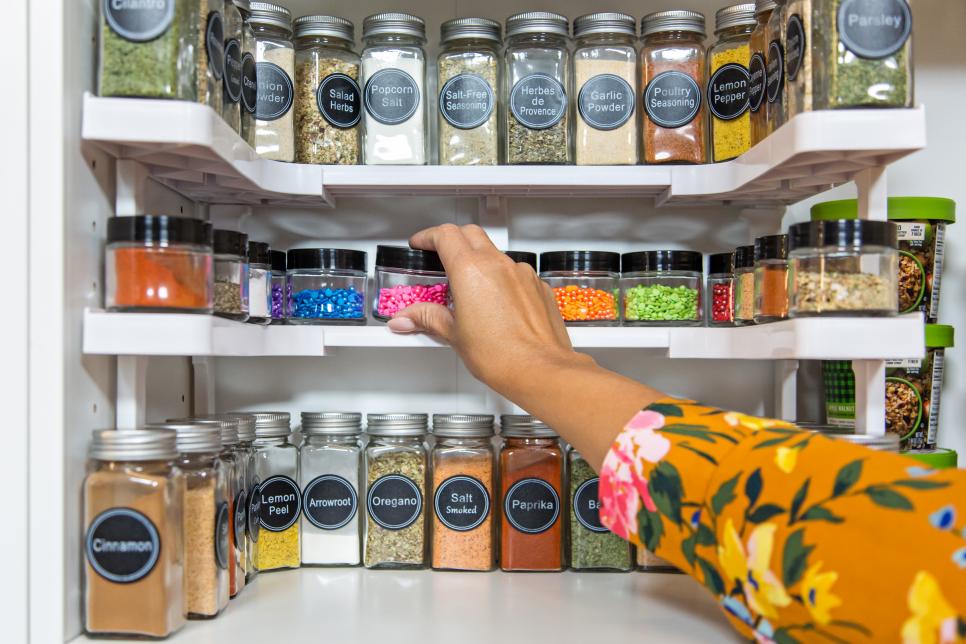
If your spices are in a cabinet, you probably can’t see half of them.
They’re lined up in rows, three deep, and you can only see the front row. The ones in the back? You forget you have them. So you buy more.
Better options:
• A tiered shelf that lets you see all three rows at once
• A drawer with an insert that keeps everything in a single layer
• A lazy Susan so you can spin to see what’s in the back
The key is being able to see every spice without moving anything.
Pantry Items
Stop putting new items in front of old items.
This is how you end up with three bottles of soy sauce—two in the back that you forgot about, and one new one in front.
When you buy something you already have, put the new one in the back and move the old one to the front. Use the oldest one first.
And arrange pantry items so you can see everything at a glance. Nothing hidden behind other items. If you have to move something to see what’s behind it, you’ll forget it’s there.
The Real Problem with Deep Cabinets and Drawers
Deep storage is where kitchen items go to die.
You put something in the back of a deep cabinet or drawer, and it might as well not exist anymore. You’ll forget you have it. You’ll buy a replacement. The original will stay in the back gathering dust.
If you have deep drawers or cabinets, you have three options:
Option 1: Use drawer organizers that create sections. This prevents things from sliding to the back and disappearing.
Option 2: Use pull-out shelves or lazy Susans. This lets you access the back without digging.
Option 3: Only store things in the front half. Leave the back empty. Yes, you’re “wasting” space. But you’re not wasting money on duplicates or mental energy searching for things.
Clear Containers Aren’t Always the Answer
I know the Instagram-perfect pantries with matching clear containers look amazing.
But here’s the truth: clear containers only help if you can actually see what’s in them.
If your clear containers are stacked three high and two deep, you still can’t see what you have without unpacking half the pantry.
Clear containers work when they’re in a single layer where you can see all of them at once.
They don’t work when they’re creating the same visibility problem you had before—just in prettier packaging.
Test Your Kitchen Right Now
Want to know if your kitchen is organized for use or just for storage?
Try this: Open your utensil drawer and count how long it takes you to spot a specific item. Let’s say… a vegetable peeler.
Can you see it immediately? Or do you have to move things around to find it?
Now try your spice cabinet. Can you see every spice you own without moving anything? Or are half of them hidden behind other bottles?
If you’re moving things around to find what you need, your kitchen is organized for storage.
And that’s why you keep buying duplicates.
Making the Shift
You don’t have to reorganize your entire kitchen this weekend.
But pick one area—maybe your utensil drawer, or your spice cabinet, or your food storage containers—and reorganize it for visibility instead of storage.
Ask yourself: Can I see everything I have at a glance?
If the answer is no, figure out what needs to change. Add dividers. Remove excess items. Rearrange so nothing is hidden.
Then watch what happens over the next few weeks.
I’m willing to bet you stop buying duplicates. You stop searching for things you know you have somewhere. Cooking gets a little bit easier because you can find what you need when you need it.
That’s what organizing for use looks like.
If Your Whole Kitchen Needs Help
If you’re reading this and thinking “my entire kitchen is a disaster and I don’t even know where to start,” I get it.
That’s exactly what I help Houston-area families figure out. We look at how you actually use your kitchen, what’s causing the most frustration, and create systems that let you see what you have when you need it.
Not Instagram-perfect systems. Working systems.
Book a consultation or call 832-271-7608. Let’s make your kitchen actually work for you.
(Not in Houston? I do virtual consultations too.)
One More Thing
If you’re doing the January Decluttering Challenge with me, the first week is all about the kitchen. Days 1-5 cover Tupperware, the junk drawer, pots and pans, the silverware drawer, and dish towels.
As you go through those areas, ask yourself: Can I see what I have? Or am I organizing for storage instead of use?
That one shift in thinking changes everything.
Download the free challenge calendar if you haven’t already, and let’s tackle this together.

Working with Taya and her team is easy. You can book an appointment easily on her website, or contact her directly at 832-271-7608
- Why Getting Rid of Old Socks Feels Harder Than It Should - January 13, 2026
- Why You Keep Buying Duplicate Kitchen Items (And How to Actually Fix It) - January 8, 2026
- The Truth About Organization: Why One Size Never Fits All - January 6, 2026